Many investors mistakenly assume that small pet food is simply a scaled-down version of standard dog kibble. This oversight ignores the specific physiological needs of hamsters and gerbils, which demand precise particle hardness, nutrient gelatinization, and mixing uniformity. Failure to address these nuances often results in poor palatability, nutritional degradation, or inconsistent pellet formation during manufacturing.
To produce high-quality feed for these small animals, manufacturers must implement a customized processing approach. The core solution involves using a twin-screw extrusion system capable of handling complex formulations with high shear control, paired with a precision drying system that ensures uniform moisture removal without damaging tiny pellets. Matching the entire line setup to the specific pellet size and recipe is critical for maintaining product consistency and operational efficiency.
Nutritional and Textural Requirements for Hamster and Gerbil Diets
Hamsters and gerbils have distinct dietary requirements that differ significantly from larger pets. Their smaller jaw structures and digestive systems necessitate kibble with specific density and texture profiles. If the pellets are too hard, they may cause dental issues; if too soft, they can crumble into dust, leading to waste and respiratory problems for the animals. Therefore, controlling the expansion ratio and final bulk density is a primary engineering challenge.
Nutrient retention is another critical factor. Many small pet formulas include heat-sensitive vitamins, probiotics, or fresh meat ingredients. Excessive thermal exposure during extrusion can degrade these valuable components. Achieving the right balance requires precise temperature profiling within the barrel. The goal is to ensure sufficient starch gelatinization for digestibility while minimizing thermal damage to sensitive additives.
Mixing uniformity also plays a vital role in product quality. Inconsistent distribution of micro-ingredients can lead to nutritional gaps or palatability issues. A well-designed pre-conditioning and mixing stage ensures that all raw materials are homogenized before entering the extruder. This step is particularly important when working with diverse ingredient sets common in specialty small pet diets.
Core Equipment Selection for a Rodent Feed Line
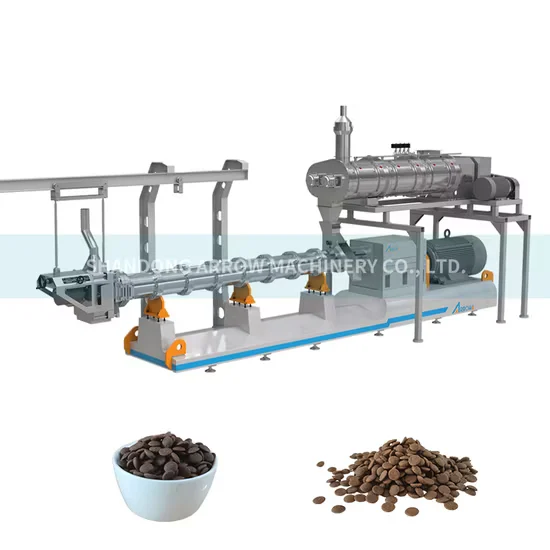
Selecting the right machinery is fundamental to meeting the strict quality standards of small pet food production. The Twin-Screw Extruder is often the preferred choice for these applications due to its versatility and precise control over shear and residence time. Unlike single-screw systems, twin-screw configurations allow for better handling of high-fat or high-moisture ingredients, such as fresh meat slurries. This flexibility enables manufacturers to experiment with novel formulations without compromising structural integrity.
The screw configuration can be adjusted to modulate the mechanical energy input. For small pellets, achieving the right initial density before drying is crucial. If the extrudate is too dense, it may not dry evenly; if too porous, it may become brittle. The ability to fine-tune screw elements allows engineers to optimize the cooking process for specific recipe behaviors, ensuring consistent pellet formation regardless of minor ingredient variations.
Downstream, drying technology must match the delicacy of the product. Standard dryers may apply excessive airflow that causes small pellets to shift unevenly or crack. A Cross-Flow Circulation Dryer offers a more controlled environment, allowing for gentle yet efficient moisture removal. By recalibrating airflow patterns, manufacturers can prevent the common issue of surface hardening while the interior remains damp, which often leads to mold growth during storage.
Coating and flavoring also require specialized equipment. For high-fat diets, vacuum coating systems ensure deep penetration of oils without making the surface greasy. For surface seasoning, drum flavoring machines provide uniform coverage. Integrating these systems correctly ensures that the final product meets both nutritional specifications and animal preference tests.
Designing the Plant Layout and Capacity Matching
A well-planned factory layout is essential for operational efficiency and future scalability. When designing a rodent feed production line, balancing the capacity of each section is key. The extruder is rarely the bottleneck; instead, drying and cooling stages often limit overall throughput. Mismatched equipment can lead to upstream congestion or downstream starvation, reducing overall plant efficiency.
For facilities with limited space, modular design principles offer significant advantages. Equipment can be arranged vertically or in compact linear configurations to maximize footprint utility. Additionally, planning for staged expansion allows investors to start with a baseline capacity and add modules as market demand grows. This approach reduces initial capital expenditure while maintaining the option for future growth.
Utility constraints must also be considered early in the design phase. Power availability, steam generation capacity, and water quality all influence equipment selection. For instance, certain drying technologies may require more energy but offer faster processing times. Evaluating local utility costs and limitations helps in choosing the most economical operational setup.
Quality Control and Trial Testing Before Full Production
Before committing to full-scale production, rigorous testing is indispensable. Raw material behavior can vary significantly based on source and season. Conducting recipe trials on a pilot scale allows engineers to observe how specific ingredients interact under extrusion conditions. This process helps identify potential issues such as die swell, irregular cutting, or poor drying performance before they become costly problems in a commercial setting.
During these trials, key parameters such as pellet buoyancy, density, and moisture content are measured. For small pet food, even minor deviations can affect animal acceptance. Adjusting the screw speed, feed rate, and barrel temperature during trials helps establish the optimal operating window. This data forms the basis for the final machine configuration and operational protocols.
Shandong Arrow Machinery supports this phase by offering process consultation and equipment configuration based on trial results. By validating the process early, manufacturers can reduce commissioning time and ensure a smoother transition to full production. This proactive approach minimizes the risk of producing off-spec product during the initial run.
Frequently Asked Questions
Q: Can the same extruder be used for both hamster and gerbil feed?
A: Yes, a twin-screw extruder can process both hamster and gerbil feed, provided the screw configuration and die plates are adjusted. Since both animals require small, dense pellets, the base machinery is similar. However, specific recipes may require different thermal profiles. Changing the die plate hole diameter and adjusting the cutter speed allows for quick switching between product types without major hardware changes.
Q: How do you ensure uniform drying for very small kibble sizes?
A: Uniform drying for small kibble requires precise airflow control and consistent bed depth in the dryer. A cross-flow circulation dryer is effective because it allows for adjustable air velocity and temperature zones. Ensuring that the pellets are spread evenly on the conveyor belt prevents channeling, where air bypasses the product. Regular calibration of fans and heaters maintains consistent drying rates across the entire batch.
Q: What information is needed to design a complete rodent feed production line?
A: To design an efficient line, suppliers need details on product type, raw material formulation, required capacity, and target pellet characteristics. Information on factory dimensions, power supply, and available utilities is also crucial. Additionally, specifying whether the line needs to handle fresh meat or high-oil ingredients helps in selecting the appropriate extruder and coating systems. This data ensures the proposed layout matches your specific production goals.
Q: Do you provide layout design for existing factory upgrades?
A: Yes, layout designs can be created for both new facilities and existing plant upgrades. Engineers assess the current infrastructure, including space constraints and utility connections, to integrate new equipment seamlessly. This service helps maximize the use of existing assets while improving production capacity or product quality. The proposed layout considers maintenance access and workflow efficiency to ensure smooth operations post-upgrade.
Ready to optimize your small pet food manufacturing process? Send your formula and capacity requirements to receive a preliminary configuration scheme and layout proposal. Discuss your specific raw material challenges with our engineering team to determine if recipe trials are necessary for your project. Request technical specifications and detailed plant layouts to visualize your future production capabilities.