Many investors entering the US pet food market assume a single production line can handle both dry kibble and wet meat chunks. This misconception often leads to severe operational bottlenecks, where moisture control conflicts with thermal processing requirements, turning a profitable recipe into a solid block of waste. I still remember sweating through a night shift in Cairo when a client tried switching from dry kibble to wet meat chunks without adjusting the barrel temperature. The twin-screw extruder choked completely on the sticky mash, requiring hours of manual cleanup before we could recalibrate the feeding system.
The core reality is that dry and wet dog food production lines are fundamentally different systems. Dry lines focus on expansion, starch gelatinization, and aggressive moisture removal via drying. Wet lines prioritize protein texturization, high-moisture retention, and sterile packaging. Choosing the right path requires matching your specific ingredient behavior and target shelf life to the correct mechanical configuration, rather than seeking a universal solution that compromises both.
Core Process Differences Between Dry and Wet Dog Food Lines
The divergence between dry and wet manufacturing begins at the extrusion stage but extends deeply into post-processing. For dry kibble, the goal is to create a stable, low-moisture product typically containing 8-10% water. This requires high shear and temperature to expand the starch matrix, followed by intensive drying. In contrast, wet food processing aims for high palatability and moisture content, often exceeding 70-80%. The extrusion parameters here are lower in temperature to preserve protein structure and avoid excessive expansion, focusing instead on creating distinct meat-like textures or chunks.
Thermal profiles dictate the entire downstream workflow. Dry lines rely on cross-flow circulation dryers to reduce moisture efficiently without damaging the kibble structure. Wet lines, however, bypass extensive drying. Instead, they move directly to filling and retorting or aseptic packaging to ensure safety. Attempting to run high-moisture wet formulas through a standard dry kibble dryer will result in case hardening, where the exterior dries while the interior remains susceptible to microbial growth. Understanding these thermal limits is critical before specifying any dog food production lines.
Equipment Configuration for Dry Kibble and Baked Feeds
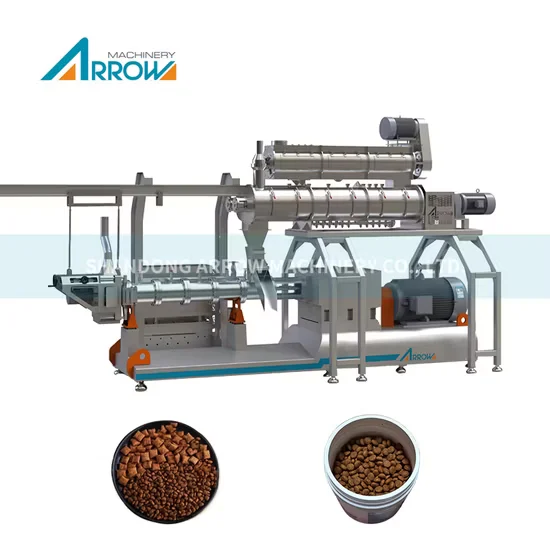
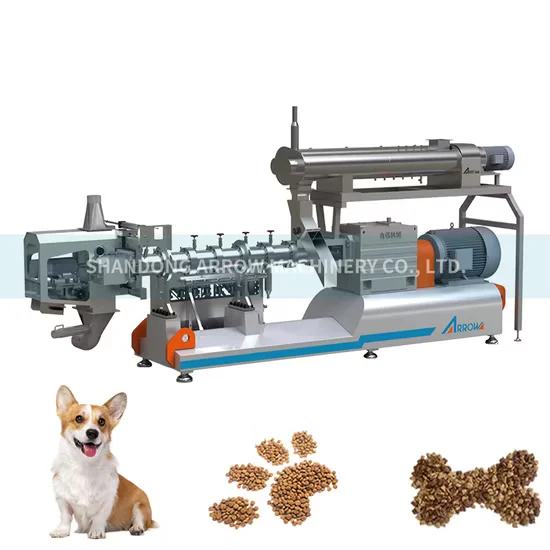
Designing a dry pet food line centers on the extrusion and drying balance. The Twin-Screw Extruder is the heart of this system, offering flexibility in handling varied raw material ratios, including fresh meat inclusions. Its intermeshing screws provide superior mixing and shear control, which is essential for consistent expansion and density management. When formulating for high-energy diets with significant fat content, the extruder must be paired with precise preconditioning to ensure uniform cooking before the material enters the main barrel.
Downstream, the drying phase is often the bottleneck in capacity planning. A Cross-Flow Circulation Dryer ensures even heat distribution and moisture removal, preventing the uneven particle dimensions that plague inferior systems. If you are targeting the growing baked treat segment, the process shifts slightly. Baked feeds use a Baked Pet Food Forming Machine rather than high-pressure expansion. This method creates denser, harder textures preferred for dental health products, requiring different thermal settings and longer baking times compared to standard puffed kibble.
Selecting the right grinder and mixer upstream is equally vital. Uniform particle size from the Hammer Mill ensures smooth feeding into the extruder, reducing wear on the screws and dies. A Twin-Shaft Paddle Mixer provides the homogeneity needed for consistent nutrient distribution, especially when adding micro-ingredients or vitamins. These components must be sized to match the extruder’s throughput to avoid surging or starving the main processing unit.
Machinery Setup for Wet Food and Sauce Processing
Wet food production demands a different approach to texture and preservation. The Wet Food Meat Chunks Processing Line utilizes specialized extrusion techniques to create fibrous, meat-like structures that mimic muscle tissue. Unlike dry kibble, these products are not expanded to low densities. Instead, the focus is on maintaining structural integrity during the high-moisture cooking and sterilization phases. The Low-Temperature Cold Extruder may also play a role here for specific treats that require minimal thermal degradation of sensitive nutrients.
Post-extrusion, the handling of wet products requires sanitary design principles to prevent contamination. The Texturized Wet Food Processing Line integrates seamlessly with filling and sealing equipment. For products involving sauces or gravies, the Pet Sauce Production Line component ensures consistent viscosity and coating. Vacuum Coating Machines are less relevant here than in dry food seasoning, as the flavor profile is often integrated into the sauce or the chunk itself during cooking.
Moisture consistency is the primary quality metric for wet food. Any deviation can affect the seal integrity of cans or pouches, leading to spoilage. Therefore, the extrusion system must deliver a uniform output with predictable rheological properties. This requires close collaboration between the formulation team and the equipment engineers to adjust screw configurations and die pressures. The goal is to achieve the desired bite force and appearance without compromising the sterilization efficiency of the final package.
Turnkey Plant Layout and Utility Requirements for US Brands
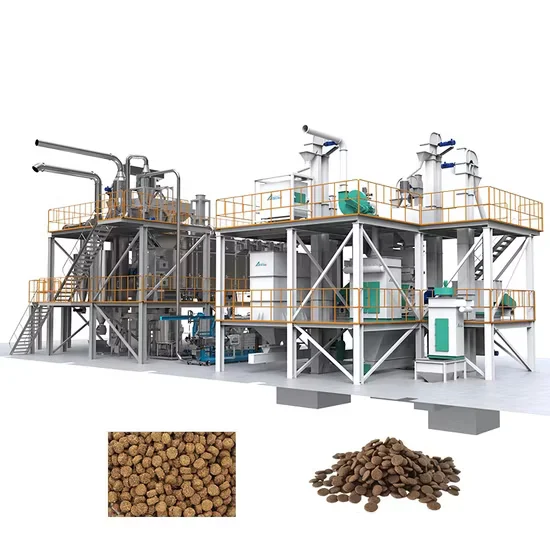
Planning a facility for dog food production lines involves more than just arranging machines. It requires a holistic view of utility consumption, footprint, and workflow efficiency. Dry lines consume significant energy for drying and ventilation, while wet lines demand robust steam and water supplies for cooking and cleaning. A well-designed layout separates these zones to optimize utility usage and maintain hygiene standards. For US brands, adhering to local safety and sanitation codes is non-negotiable, influencing everything from floor drainage to electrical panel placement.
Space constraints often drive the decision between modular upgrades and full turnkey installations. If you are expanding an existing plant, integrating a new extrusion module requires careful analysis of upstream grinding and downstream packaging capacities. Shandong Arrow Machinery supports this by offering custom line layouts that respect your existing infrastructure. We assess your power frequency, voltage, and fuel sources to ensure the new equipment integrates smoothly without overloading your current utilities.
For new facilities, a staged expansion plan can mitigate initial capital risk. Starting with a core extrusion and drying system allows you to validate your market presence before adding complex coating or specialized packaging lines. Our engineering team provides detailed layout drawings that account for maintenance access, operator safety, and future scalability. This proactive approach prevents the common pitfall of installing equipment that is difficult to service or impossible to expand.
Frequently Asked Questions
Q: Can a single extruder produce both dry kibble and wet food chunks?
A: While a twin-screw extruder is versatile, producing both dry kibble and wet chunks efficiently on the same line is impractical. Dry kibble requires high expansion and subsequent drying, whereas wet chunks need minimal expansion and immediate packaging. Switching between these modes would require extensive cleaning, reconfiguration of screws and dies, and significant downtime. It is more cost-effective to dedicate separate lines or modules for each product type to maintain consistent quality and throughput.
Q: What are the main utility differences between a dry dog food line and a wet food line?
A: Dry dog food lines are energy-intensive due to the drying process, requiring substantial electricity or gas for hot air generation and ventilation. Wet food lines, conversely, consume more water and steam for cooking, sterilization, and cleaning-in-place (CIP) systems. Wet lines also need robust wastewater treatment capabilities due to higher organic load in effluent. Understanding these utility profiles is essential for accurate operational cost modeling and facility infrastructure planning.
Q: How do I choose between a twin-screw extruder and a low-temperature cold extruder for my recipe?
A: Choose a twin-screw extruder for products requiring starch gelatinization, expansion, and high cooking degrees, such as standard kibble or textured wet chunks. Opt for a low-temperature cold extruder when processing heat-sensitive ingredients or creating dense, non-expanded treats like jerky or certain chews. The decision hinges on whether your recipe relies on puffing for texture or maintains its form through mechanical shaping and gentle drying.
Q: Do you support overseas installation and commissioning for turnkey projects in the US?
A: Yes, we provide overseas engineering and commissioning options for turnkey projects. The specific scope, including team size, schedule, and travel costs, is defined contractually. We coordinate with your local contractors to ensure smooth installation, operator training, and system validation. This support ensures that your production line meets performance expectations and complies with local operational standards before full-scale manufacturing begins.
Send your product formula, target capacity, and factory dimensions to receive a customized technical specification sheet and preliminary layout. Whether you need a standalone machine or a complete turnkey solution, our engineering team will align the equipment configuration with your specific process requirements and utility constraints.