Many investors planning a new dry pet food facility conflate steam baking with traditional extrusion, assuming the downstream equipment remains interchangeable. This oversight often leads to mismatched thermal profiles and inconsistent product quality. The fundamental difference lies in how heat and moisture are applied: extrusion relies on high shear and pressure within a barrel, while steam baking uses gentle, external heat transfer to set the structure.
Choosing between a steam-baked kibble line and an extruded kibble line depends on your target product texture, nutrient retention goals, and available plant utilities. Extrusion offers high throughput and significant expansion, suitable for standard dense kibble. Steam baking provides a distinct crunchy texture and better preservation of heat-sensitive ingredients, but requires precise control over forming and extended drying times. Understanding these mechanical and thermodynamic distinctions is critical before committing capital to either process.
Thermal Mechanics: Gentle Heat vs. High Shear Pressure
The core divergence between these two processes occurs in the cooking chamber. In a traditional twin-screw extruder, raw materials are subjected to intense mechanical shear and frictional heat. The screws compress the dough, raising its temperature and pressure rapidly until it exits through a die, where sudden pressure release causes expansion. This method achieves high starch gelatinization and protein denaturation quickly, making it efficient for high-volume production.
In contrast, steam baking employs a lower-energy approach. The dough is formed into shape before entering a baking chamber where saturated steam and hot air cook the product gradually. There is no sudden pressure drop, so the kibble does not expand significantly. This gentle thermal profile minimizes the degradation of heat-sensitive vitamins and allows for higher inclusion rates of fresh meat or functional additives that might destabilize under high shear. The result is a denser, more uniform pellet with a specific crunch that differs markedly from the airy texture of extruded kibble.
This difference in thermodynamics dictates the entire upstream and downstream workflow. While an extruder can handle a wide variety of formulations by adjusting screw speed and barrel temperature, a steam-baked system relies on consistent dough rheology. If the mixture is too wet or lacks structural integrity, the formed pieces may collapse before setting. Therefore, ingredient selection and mixing precision become even more critical in a steam-baked process than in high-shear extrusion.
Equipment Configuration: Forming, Drying, and Coating Integration
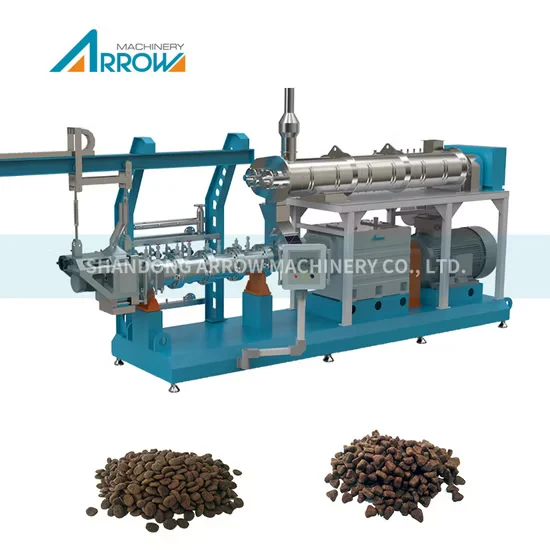
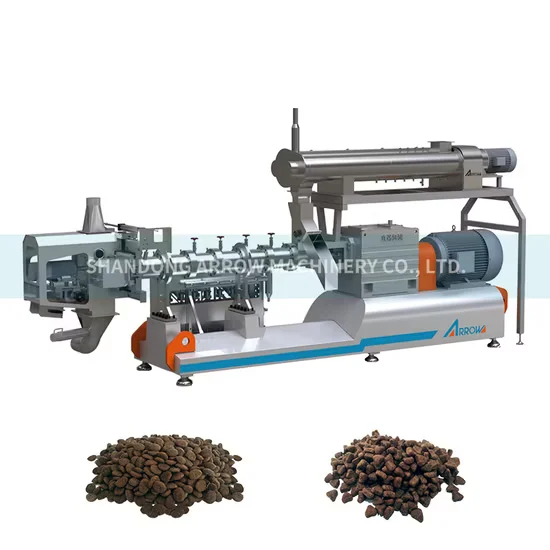
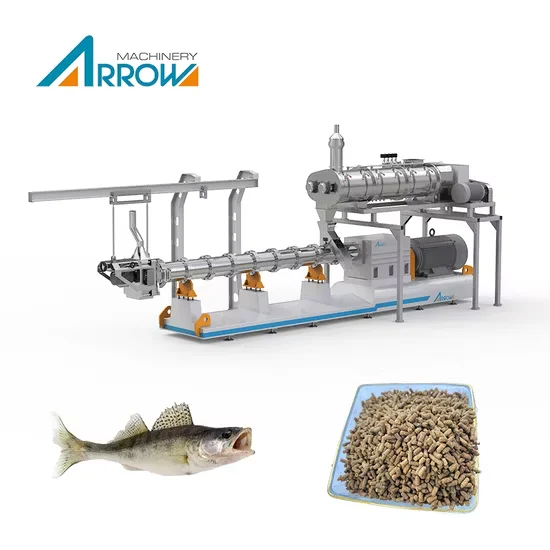
Because the cooking mechanisms differ, the hardware required for each line varies significantly. A standard extruded kibble line centers on the twin-screw extruder, which performs mixing, cooking, and shaping in one continuous unit. Downstream, the product moves directly to a dryer. However, a steam-baked kibble line requires a dedicated forming stage before cooking. The Baked Pet Food Forming Machine shapes the conditioned dough into precise geometries without the expansion force of an extruder. This machine must maintain strict dimensional accuracy, as there is no post-extrusion swelling to correct minor irregularities.
Drying represents another major distinction. Extruded kibble, having expanded and developed a porous structure, dries relatively quickly. Steam-baked kibble remains dense and retains moisture differently, requiring a longer residence time in the dryer to achieve safe water activity levels without case hardening. A Cross-Flow Circulation Dryer is often preferred here because it provides uniform airflow across the product bed, ensuring consistent moisture removal from all sides of the dense pellets. Inadequate drying can lead to microbial growth or texture issues, making this stage a potential bottleneck if not sized correctly for the specific density of steam-baked products.
Coating applications also adapt to the surface characteristics of the product. Extruded kibble has a rough, porous surface that absorbs fats and flavors readily. Steam-baked kibble has a smoother, sealed surface. To achieve adequate palatability, vacuum coating systems may be necessary to force flavorants into the matrix, or specialized drum coaters must be used to ensure even coverage without clumping. Integrating these systems requires careful balancing of throughput; the dryer and coater must match the output of the former and baker to prevent backups or starvation.
Product Profile: Texture, Density, and Nutrient Integrity
The end product defines the market positioning. Extruded kibble is known for its light weight and high expansion ratio, which appeals to cost-conscious manufacturers and pets accustomed to traditional textures. It is ideal for standard maintenance diets where high caloric density per volume is not the primary constraint. However, the high temperatures involved can reduce the bioavailability of certain nutrients unless protected by encapsulation or post-extrusion addition.
Steam-baked kibble offers a premium alternative with a unique sensory profile. The texture is often described as crispier or harder, providing a different chewing experience that some pet owners associate with higher quality. Because the cooking temperature is generally lower and more controlled, natural colors and flavors from fresh ingredients remain more vibrant. This makes the steam-baked kibble line particularly attractive for brands focusing on grain-free, high-meat, or functional formulas where ingredient integrity is a key selling point.
Density plays a crucial role in packaging and shipping. Steam-baked kibble is denser than extruded kibble, meaning fewer pieces per kilogram but a smaller volume for the same weight. This can influence bag sizing and consumer perception of value. Additionally, the lack of expansion means the kibble holds its shape better in moist environments, potentially reducing breakage during transport and handling. For manufacturers targeting niche markets or premium segments, these physical attributes can justify a higher price point, provided the production costs are managed effectively.
Utility and Footprint Considerations for Pet Food Plants
Planning the physical layout and utility infrastructure requires early decision-making between these two technologies. A twin-screw extrusion line demands significant electrical power to drive the motors and generate frictional heat. It also requires precise water and steam injection for preconditioning, but the overall thermal load is largely internal. In contrast, a steam-baked line relies heavily on external steam generation for the baking chamber and hot air for drying. This necessitates a robust boiler system and potentially larger gas or electric heaters for the dryer.
Footprint is another critical factor. While extruders are compact relative to their output, the downstream drying section for steam-baked kibble may need to be longer to accommodate the slower drying rate of dense pellets. A Cross-Flow Circulation Dryer designed for this application will have different spatial requirements than a standard pneumatic conveyor dryer used for extruded products. Manufacturers must evaluate ceiling height, floor space, and access for maintenance when designing the plant layout.
Arrow supports clients in mapping these requirements by reviewing existing utility constraints and factory dimensions. Whether upgrading an existing facility or building a new one, the engineering team assesses whether the current steam capacity can support a baking line or if electrical upgrades are needed for high-torque extruders. This holistic view ensures that the selected equipment integrates smoothly with local infrastructure, avoiding costly retrofits after installation.
Frequently Asked Questions
Q: Can a twin-screw extruder be used for steam-baked kibble production?
A: No, the processes are fundamentally different. A twin-screw extruder cooks via shear and pressure, causing expansion. Steam baking requires gentle external heat without pressure-induced expansion. While an extruder can produce dense kibble by adjusting parameters, it cannot replicate the specific texture and structural setting of a dedicated steam-baked line. Using an extruder for this purpose would compromise the unique selling points of steam-baked products.
Q: How does the drying time differ between steam-baked and extruded kibble?
A: Steam-baked kibble is denser and less porous than extruded kibble, which slows moisture migration. Consequently, it typically requires a longer residence time in the dryer to reach safe moisture levels. A Cross-Flow Circulation Dryer is often recommended to ensure uniform drying without overheating the exterior. Extruded kibble, with its expanded structure, dries more rapidly, allowing for shorter dryer lengths or higher airflow rates in standard drying systems.
Q: Is fresh meat inclusion easier in steam-baked lines compared to extrusion?
A: Yes, generally. The gentle heating profile of steam baking preserves the structural integrity of fresh meat proteins better than the high shear and temperature of extrusion. High fresh meat content can make extrusion difficult due to slippage and reduced friction, requiring specialized screw configurations. Steam baking handles high-moisture doughs more forgivingly, allowing for higher inclusion rates of fresh ingredients without compromising the forming process or final pellet stability.
Q: What are the main utility requirements for a steam-baked kibble plant?
A: A steam-baked line relies heavily on consistent steam supply for the baking chamber and significant thermal energy for drying. You will need a reliable boiler system capable of maintaining steady pressure. Electrical loads may be lower than for high-torque extruders, but the thermal demand is higher. Ensure your facility has adequate gas or electric capacity for the dryer and sufficient water treatment systems for steam generation. Detailed utility maps should be reviewed during the engineering phase.
Ready to determine which process aligns with your product goals? Share your raw material formulation, target capacity, and desired product characteristics to receive a preliminary configuration. We can discuss trial options to validate texture and nutritional outcomes before finalizing your plant layout. Request technical specifications and a customized proposal to evaluate the investment fit for your facility.